

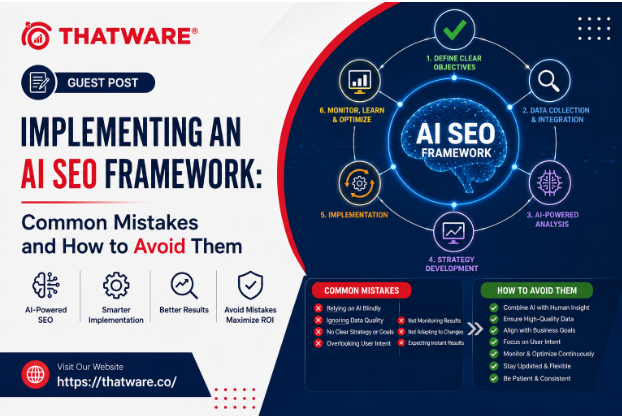
There’s a gap between deciding to implement an AI SEO framework and actually implementing one effectively. That gap is filled with common mistakes — not technical failures, mostly, but strategic and organizational ones that undermine even well-designed programs before they produce meaningful results.
Having visibility into these patterns before you start is genuinely valuable. Most are preventable if you know to look for them.
Mistake 1: Treating AI as a Replacement for Strategy
The most pervasive mistake is expecting AI tools to produce strategy rather than inform it. Feed a site into an ML-powered audit tool, get a list of recommendations, execute the list — this isn’t AI SEO, it’s just automation. The strategic layer — understanding your competitive positioning, your audience’s behavior, your domain’s specific strengths and limitations, and how to build authority within your content niche — requires human judgment that AI tools can support but not replace.
Organizations that skip the strategic layer and jump to execution consistently produce disappointing results: optimized pages that don’t rank because they’re targeting the wrong queries, content that passes technical standards but fails to demonstrate genuine expertise, link acquisition that doesn’t improve competitive positioning because it’s not topically relevant.
Mistake 2: Insufficient Onboarding and Discovery
AI SEO frameworks need data to work with. The discovery phase — technical crawl, competitive analysis, semantic landscape mapping, behavioral signal analysis — is where the intelligence foundation gets built. Compressing this phase to get to “visible work” faster almost always produces weaker strategy.
The implement AI SEO framework process should allocate at minimum four to six weeks to discovery and intelligence gathering before strategy development begins. Organizations that push to skip or abbreviate this phase are effectively asking the framework to operate with an incomplete map.
Mistake 3: Ignoring Implementation Dependencies
Identifying what needs to change is a different problem from implementing those changes. Technical recommendations require development resources. Content improvements require production capacity. Structured data updates require development access. In most organizations, these resources have competing demands and limited capacity.
AI SEO implementation without a clear understanding of implementation dependencies and development availability tends to produce long recommendation backlogs where the work never actually gets done. The strategy is sound; the execution never happens; results don’t materialize; the program gets blamed for underperformance that was actually an organizational capacity problem.
Solving this requires explicit conversations about implementation capacity before work begins, not after.
Mistake 4: Measuring the Wrong Things at the Wrong Time
AI SEO framework implementation programs get killed prematurely more often than they fail, in my experience. The early period — months one through four — produces leading indicators that signal progress but not the lagging indicators that non-technical stakeholders find convincing. Organizations that measure success by ranking changes in month two, before the technical foundation has been built and content has had time to index and settle, are measuring at the wrong time.
The solution is establishing a clear KPI framework before work begins that distinguishes leading from lagging indicators and sets appropriate timeline expectations for each. Stakeholders who understand that technical health improvements in month two predict ranking improvements in month four make much better evaluation decisions than those seeing only a ranking dashboard with flat month-two numbers.
Mistake 5: Underinvesting in Content Quality
AI-informed content briefs create better direction for content production. They don’t automatically produce better content — that depends on the skill of the writers and the depth of subject matter expertise available. Organizations that implement AI SEO content strategy but continue producing thin, generic content see the benefit of better targeting without the benefit of better ranking — because the content can’t compete on quality even when it’s correctly directed.
The realistic standard for competitive content in most verticals is higher than it was three years ago. AI has made thin content production easy, which means the competitive bar for content that actually ranks has risen. Quality investment isn’t optional.
Mistake 6: Exit Before Compounding Begins
The most expensive mistake. Most AI SEO programs reach an inflection point somewhere between month six and month twelve — when the compounding nature of the investment becomes visible and traffic growth begins to accelerate. Organizations that exit at month four because early results look modest are leaving the best part of the ROI curve unrealized.
Commit to the program length that the discovery and strategy phase identified as appropriate for your goals. Review progress against leading indicators, not just lagging ones. And recognize that the programs with the most disappointing early months often have the most dramatic twelve-month results.